
Good Slug/Bad Slug?
Learn what slugs and snails do in your garden, how they move, where they live during the day, what they like and dislike, which species are pests, and which are really the gardener's friends. Learn the best ways to control them and how to work with them.
October, not spring, is peak season. Chemical-free control works; see the full comparison below. The UK has more than 140 species of land slug and snail. Only a small proportion are significant garden pests — the RHS identifies nine slug species with confirmed pest status
Jump to - | Good Slugs | Pest Slugs | Life Cycle | Slug Predators | Control Methods |

Quick facts
Your garden probably has thousands of slugs and snails in it right now. Estimates suggest that a cubic metre of garden soil can contain around 200 slugs, with most hidden from view during the day. Even on a warm, damp night, you'll only ever see a fraction of them.
Slugs and snails have thousands of tiny teeth arranged on a ribbon-like tongue called a radula. They use it like a rasp to scrape food away, creating the jagged, torn-edge damage often seen on leaves. Don't worry though, nobody in the UK has ever been bitten by a slug!
October, not just spring, is peak slug season. Slug activity and breeding rise again in early autumn as conditions become cooler and wetter, with adults and young slugs active together. For control, October is one of the most important times of the year to get on top of them before further breeding. That's the time to get them, before they breed.
Slugs and snails can find their way home from 20 metres away. Move one to what feels like "far enough" and it may well be back.
Only 9 slug species have been identified by the RHS as having confirmed pest status. There are about 140 slug and snail species in the UK, and most live on fungi, decaying matter and detritus, causing little damage to plants.
The leopard slug will hunt other slugs. It's big, fast, and highly territorial, and may attack pest slugs in its territory. This is one good reason to avoid general poisons which can kill beneficial slugs as well as pest species.
All slugs and most snails are hermaphrodites. Every individual has both male and female reproductive organs, so when two mate, both can go on to lay eggs.
Slug and snail eggs can lie dormant in soil, hatching only once conditions are right. One bad slug season leads to many more.
The biggest UK slug ever found — The UK's largest native slug, and the largest land slug in the world, is the Ash-black Slug (Limax cinereoniger). It can grow up to 30cm long — roughly the size of a cat's tail. It's not a typical garden visitor though: it is mainly an ancient-woodland species, feeding on fungi and lichen, and is becoming harder to find as that habitat declines. Some garden slugs can be up to the size of a small banana, but it's unlikely to be the ash-black slug, as it keeps to old woods, not flower beds.
The fastest slug can move surprisingly quickly. The tramp slug (Deroceras invadens) has been recorded travelling at 17.6 metres an hour.
There is an annual World Snail Racing Championship! It has been held at Congham in Norfolk since 1967, with snails racing from the centre of a 33 cm course to the edge. The record is just 2 minutes, set by Archie in 1995.
Slugs and snails can carry the parasite Angiostrongylus vasorum (French heartworm), which can seriously affect dogs. Don't let dogs eat slugs or snails, and keep relocated slugs away from areas dogs use.
The main pest Slugs and Snails in the garden.
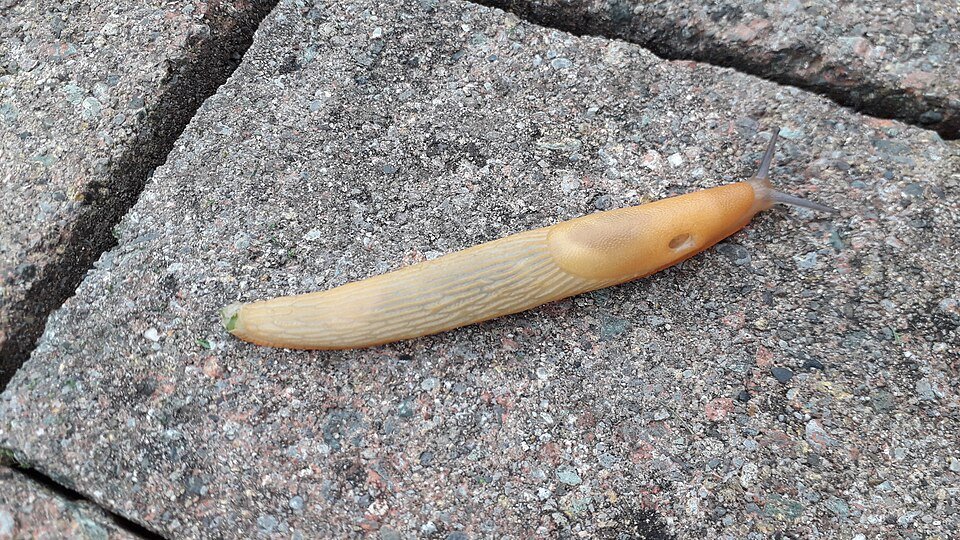
Netted Field Slug (Deroceras reticulatum) The most damaging UK garden slug. Pale brown/grey with darker net-like mottling. A major pest of seedlings, young plants and soft growth. Definite pest. The RHS identifies D. reticulatum among the species most likely to feed on garden plants, and AHDB describes it as the most common slug pest of arable crops.
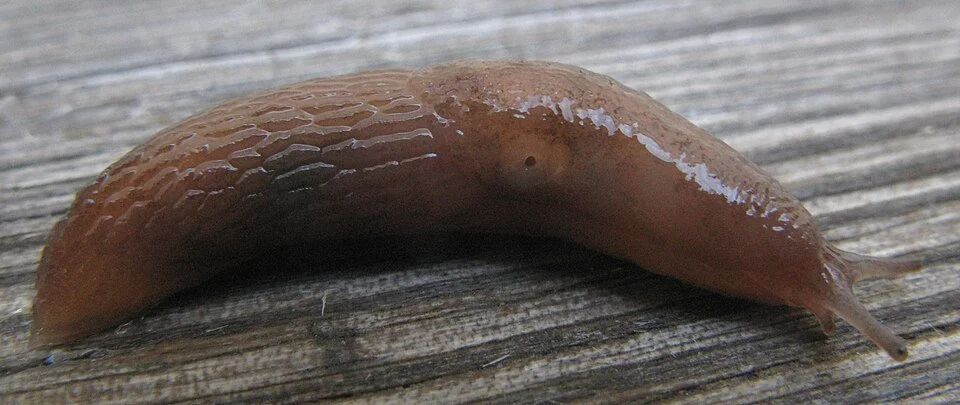
Tramp Slug (Deroceras invadens) Highly invasive, rapid breeder. Similar to the Netted Field Slug but smaller and more uniformly coloured. A significant plant pest, particularly important on container-grown plants and nursery stock. Definite pest. Attribution: J.M.C. Hutchinson, Görlitz.
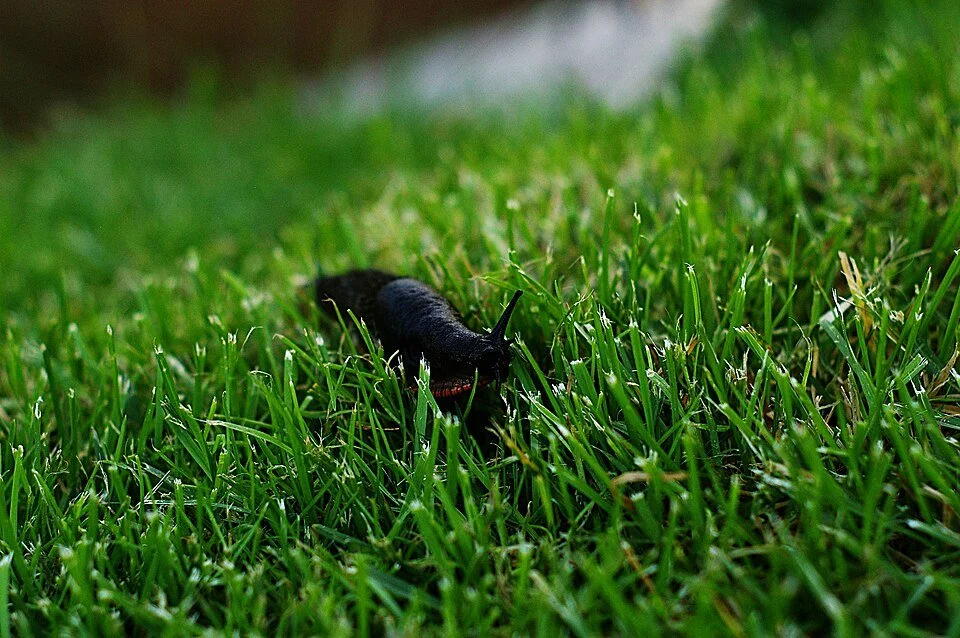
Garden Slug (Arion hortensis group) Small, dark, with an orange sole (foot). Common in beds and borders. Can cause significant damage to cultivated plants, seedlings, bulbs and tubers. Definite plant pest. Attribution: MonkeySimon, CC BY 2.0, via Wikimedia Commons.
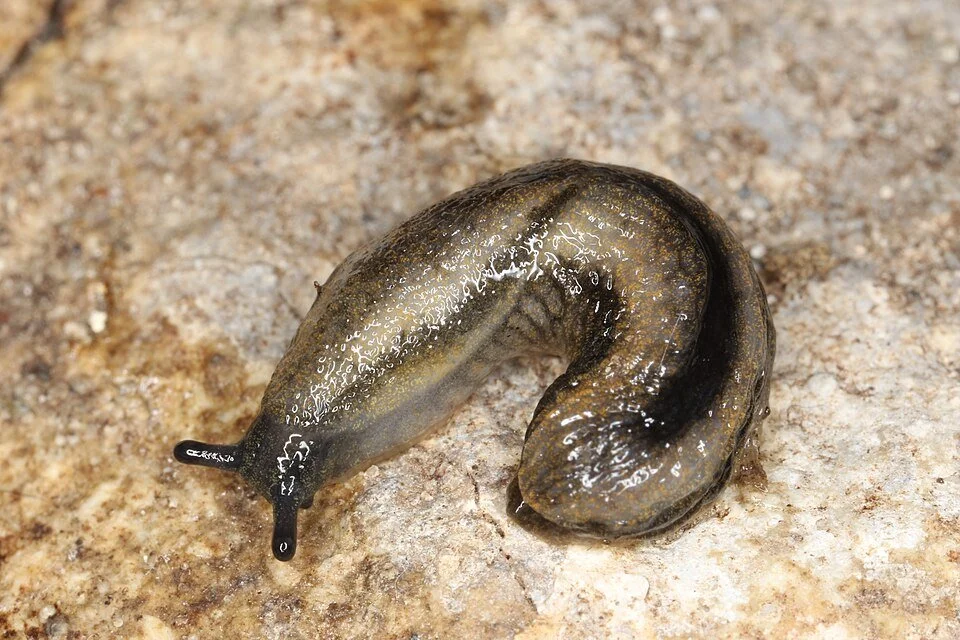
Brown Soil Slug (Arion distinctus)
A common brownish slug, often found around gardens and cultivated ground. One of the species most likely to be found feeding on garden plants, especially soft leaves and seedlings. Definite garden pest.
Attribution: Donald Hobern from Copenhagen, Denmark, CC BY 2.0
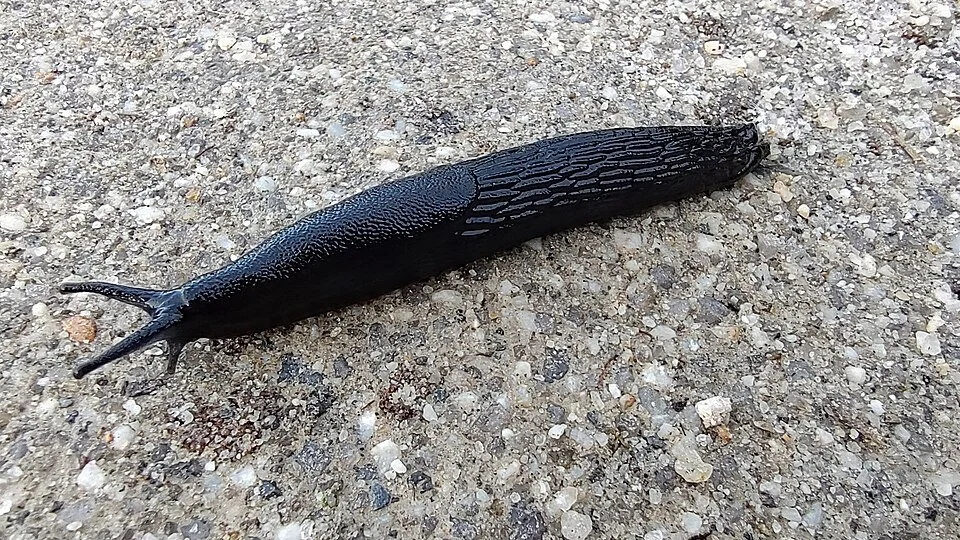
Black Slug (Arion ater) Large, usually black but can be orange-brown. Often seen on paths after rain. Mainly feeds on fungi and decaying material, but can eat soft young plants and seedlings. Usually a minor pest, but a genuine problem around vulnerable new planting and containers. Attribution: Fernando Losada Rodríguez, CC BY-SA 4.0, via Wikimedia Commons.
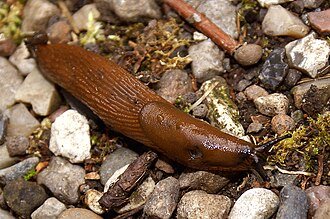
Spanish Slug (Arion vulgaris) Large, prolific and increasingly common in the UK. Reddish-brown, often mistaken for a large Black Slug. Feeds on a wide range of plants and can cause substantial damage when populations are high. Major pest. Attribution: Moogen Engelund, CC BY-SA 3.0, via Wikimedia Commons.
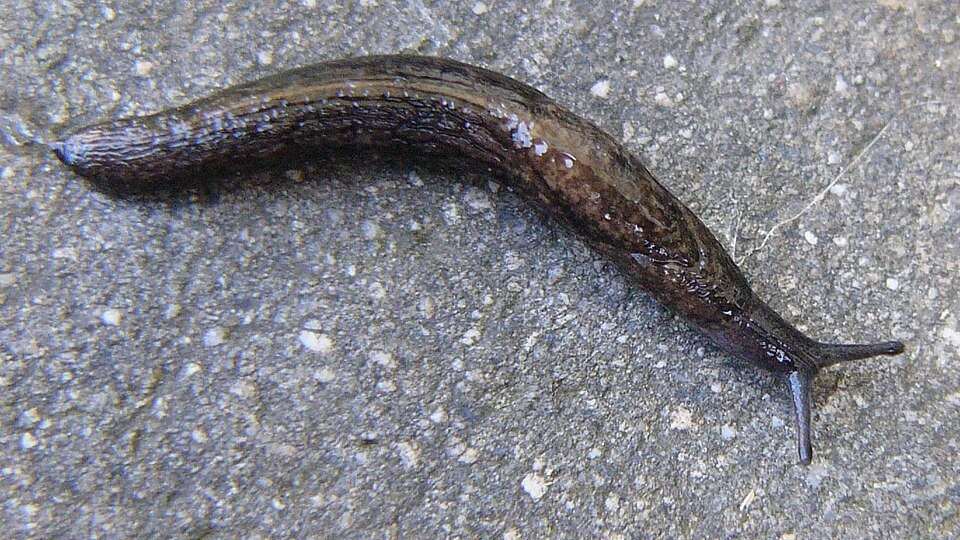
Keeled Slugs (Tandonia spp.) Mostly underground, where they can damage bulbs, roots and tubers. Similar to the Black Keeled Slug, with variable colouring. They may do considerable damage below ground without being seen. Important pest group. Attribution: Michal Maňas, CC BY 2.5, via Wikimedia Commons.
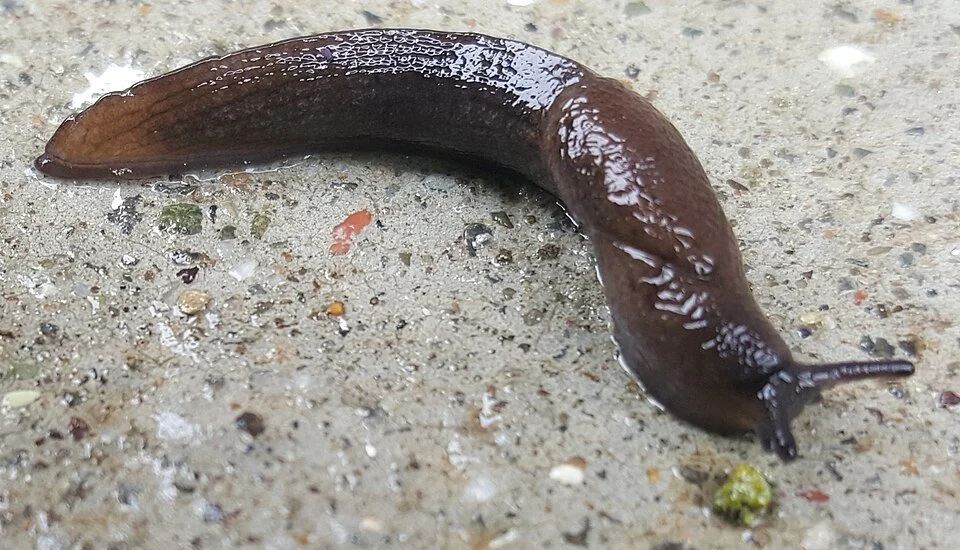
Black Keeled Slug (Milax gagates) Lives underground and damages roots and tubers. Slate-grey to black with a distinctive pale keel (ridge) along its back. Pest, particularly where underground plant parts are being damaged. Attribution: Justin Johnson, CC BY-SA 4.0, via Wikimedia Commons.
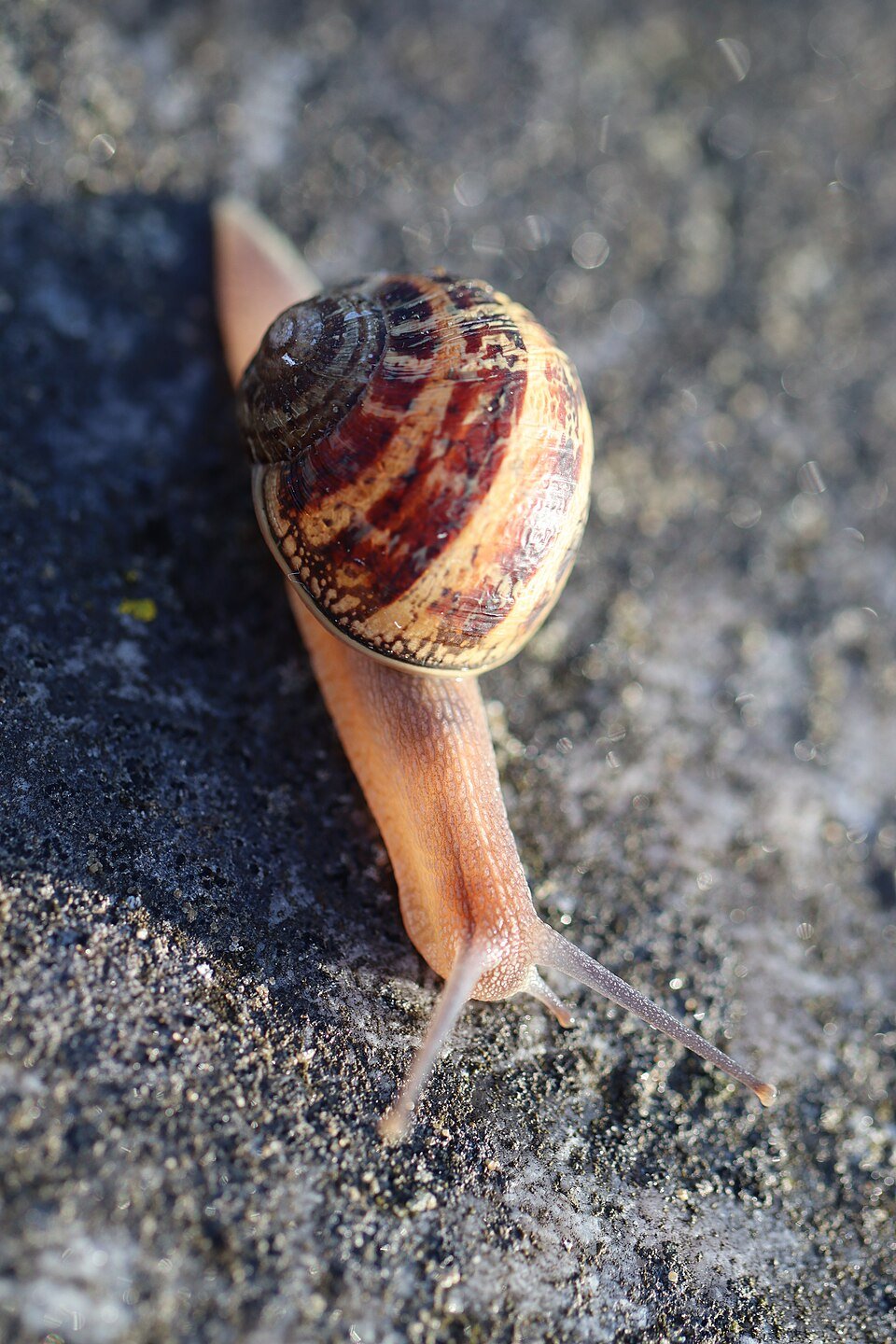
Common Garden Snail (Cornu aspersum) The familiar brown-shelled garden snail. Feeds on a wide range of ornamental plants and vegetables, particularly seedlings and soft young growth. It can climb plants and cause damage well above ground level. Definite garden pest. Attribution: Fernando Losada Rodríguez, CC BY-SA 4.0, via Wikimedia Commons.
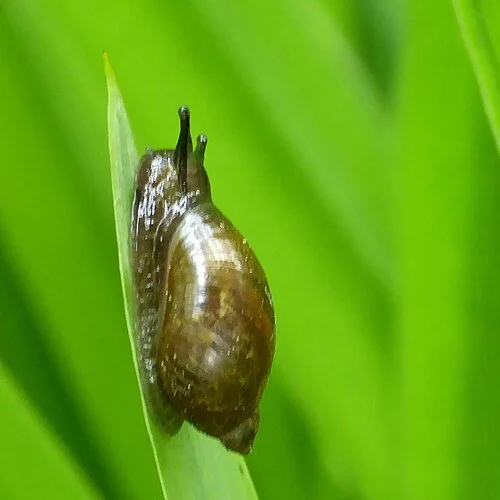
Pfeiffer's Amber Snail (Oxyloma elegans)
Small snail with a pointed, pale-to-brown shell, often found on plants and growing media rather than in obvious open spaces. A particular problem on container-grown nursery stock, where it can feed on soft leaves. Important container-plant pest.
Attribution: Biodehio, CC BY-SA 4.0
Jump to - | Top of page | Life Cycle | Slug Predators | Control Methods |
A selection of the more common beneficial slugs and snails in the garden
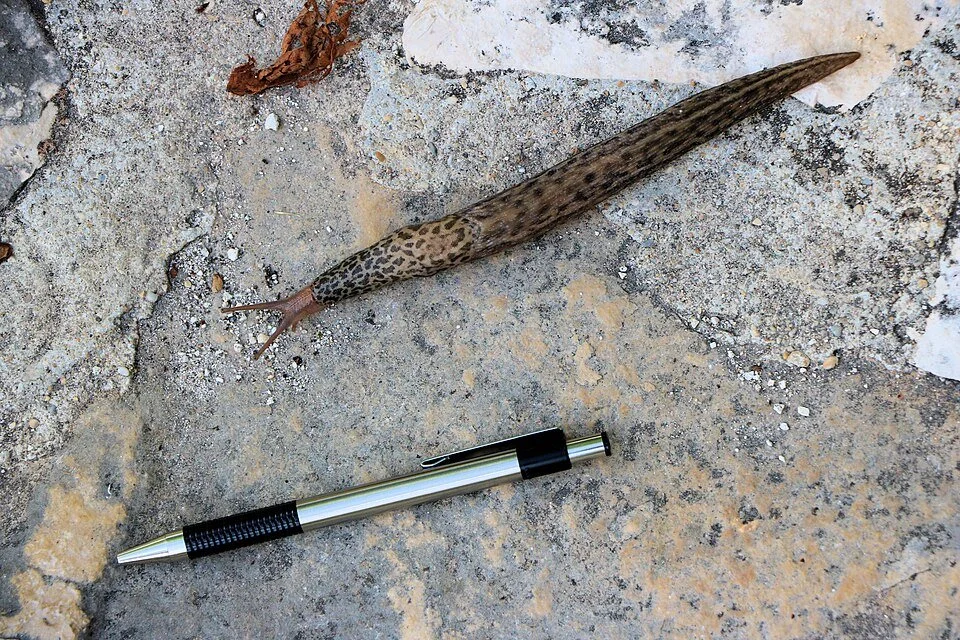
Leopard Slug (Limax maximus) The most important beneficial slug in UK gardens. Large (up to 20cm), with a distinctive spotted or striped pattern. Never eats healthy living plants — actively hunts and eats other slugs and their eggs, including pest species. If you see one, it's a good sign for your garden. Attribution - Paul Harrison, CC BY-SA 4.0
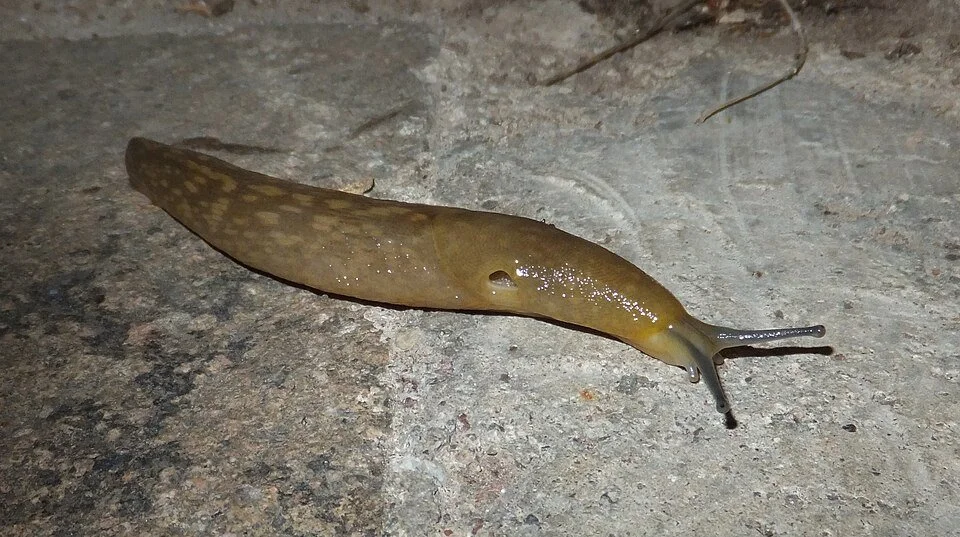
Yellow Cellar Slug (Limacus flavus) Bright yellow with grey mottling. Usually found in damp, dark places rather than open beds.
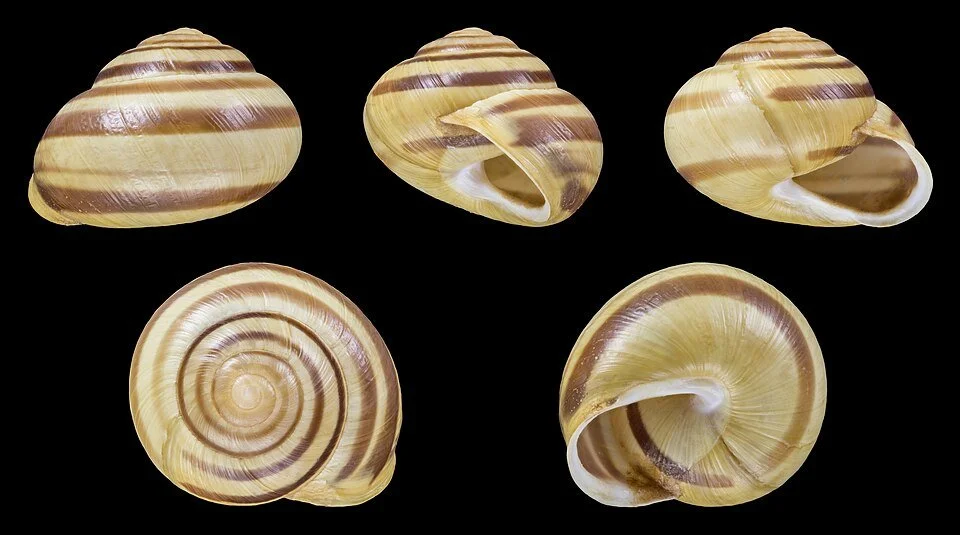
Banded Snail (Cepaea nemoralis / Cepaea hortensis) Distinctive striped shell, colour and banding pattern highly variable. Common in hedgerows and borders. Attribution H. Zell, CC BY-SA 3.0
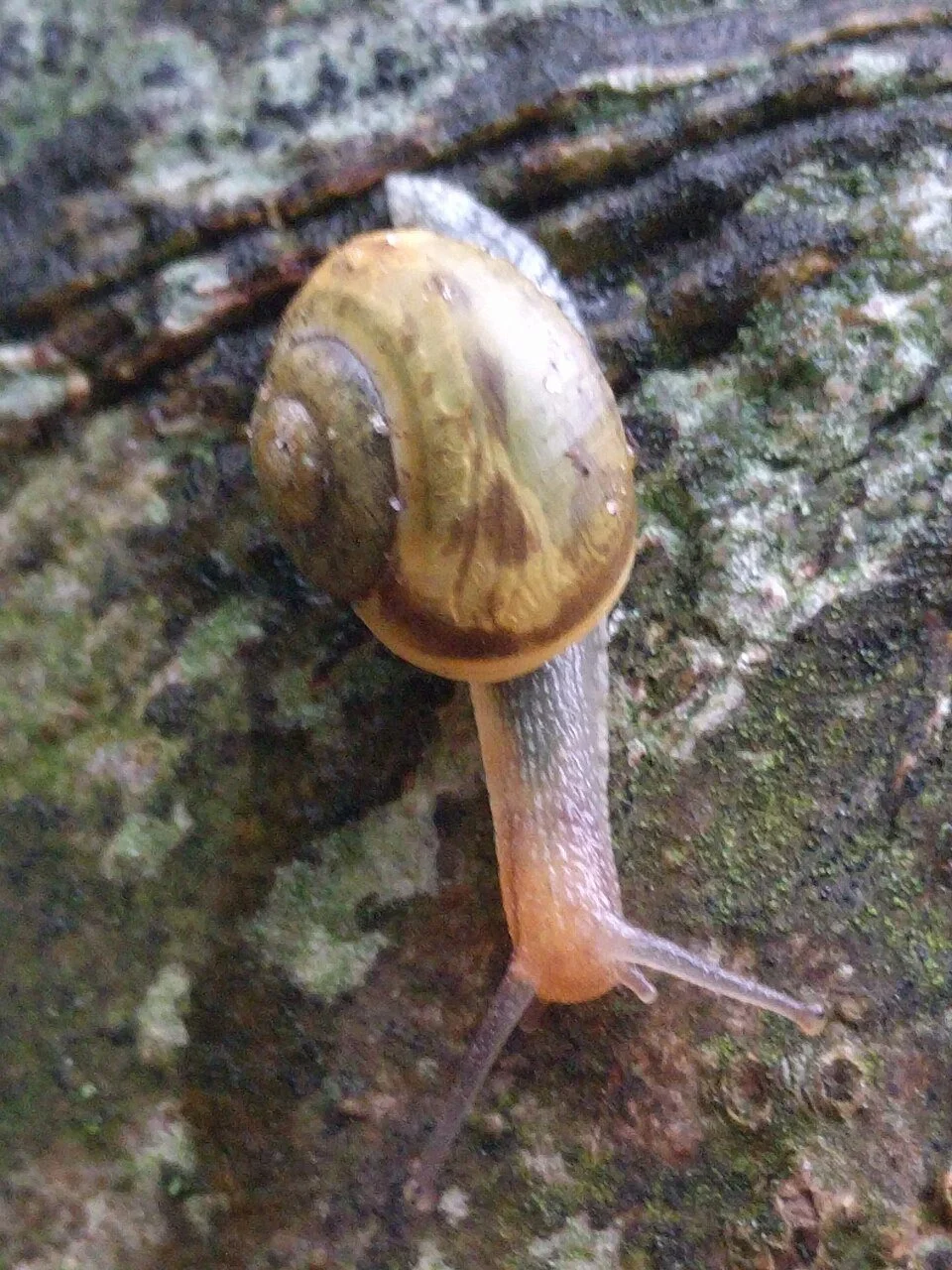
Kentish Snail (Monacha cantiana) Pale, flattened shell. Common on chalky/limey soils. Attribution: Rudolphous
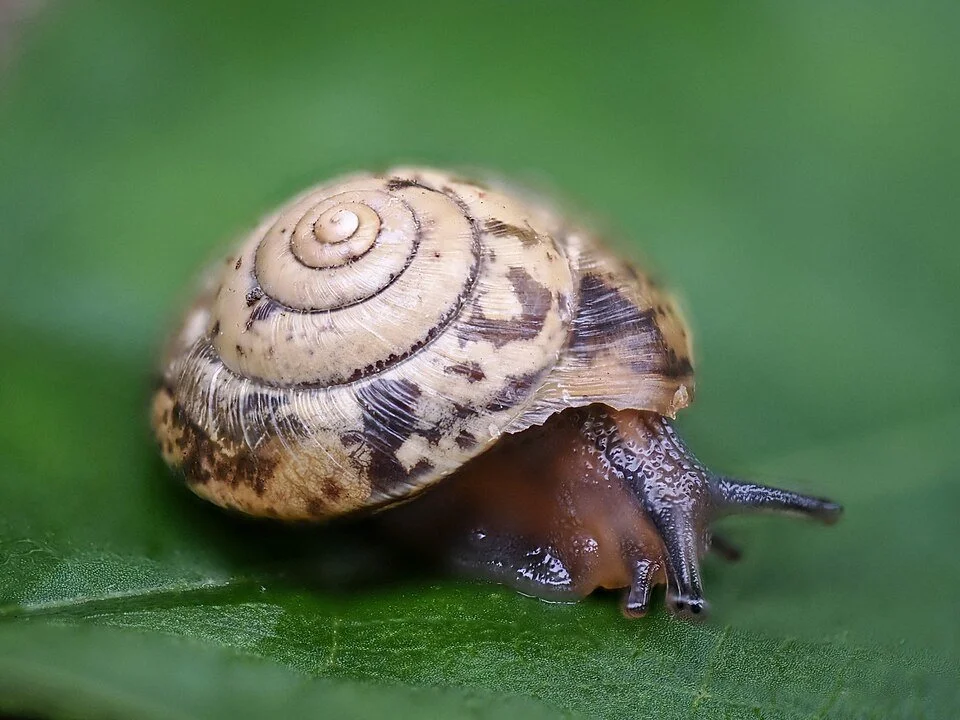
Girdled Snail (Hygromia cinctella)
Small, with a distinctive keeled (ridged) shell edge. A relatively recent arrival to the UK, now widespread.
Attribution: Gilles San Martin, CC BY-SA 4.0
Life Cycle & Behaviour
Breeding has two main peaks for many UK pest slugs: spring and autumn. Grey field slugs typically peak in April/May and September/October. For the tramp slug, temperatures above about 12°C are needed for egg laying, while its eggs can develop and hatch above 5.4°C. Autumn-laid eggs can therefore survive the winter and hatch when conditions improve in spring.
A single grey field slug can lay up to 500 eggs in a season. A common garden snail can produce over 400 eggs a year.
Lifespan is typically 1 to 2 years for the main pest species. Some slugs live 4 to 5 years.
What actually brings slugs out: a combination of falling temperature at dusk, high humidity and damp conditions. Rain during or just before the night is a particularly strong trigger. Below about 5°C, activity falls sharply, although some species such as the grey field slug can remain active surprisingly close to freezing. After a hard frost, activity may take several days of milder conditions to return.
Moonlight suppresses activity: a bright, clear full-moon night can keep slugs under cover, just as bright artificial light does.
Best conditions for slug activity: mild, humid and shortly after rain, particularly from dusk onwards. Activity can remain high through the night.
Worst conditions: hard frost, strong wind, prolonged dry spells, or a bright moon.
Where they live
Slugs spend the vast majority of their time out of sight. Slugs and snails wait underground, under stones and debris, or tucked into dense vegetation, waiting for conditions to turn favourable. When it's a damp warm night, the pest slugs in particular come out of hiding and make their way towards your plants for a feast. On a good night in autumn, up to 80% of grey field slugs will be out feeding in the open. The majority of the harmless slugs stay hidden though, working their way through the garden debris.
Some areas of the garden are far more crowded than others. Compost heaps, dense damp borders, and leaf litter are genuine hotspots. Densities in these favoured areas can run many times higher than the garden average, while much of the rest of the garden is comparatively empty. This is exactly why targeted attention to the right spots on the right nights is far more effective than trying to treat a whole garden evenly.
How they move and navigate
Speed: the fastest UK slug is the Tramp Slug, covering around 29cm per minute at cruising speed — enough to cover a typical garden in a single night. The leopard slug, when actively pursuing prey, moves at up to 15cm a minute.
How they find food: mainly by smell. Slugs detect airborne scent compounds drifting from plants and follow that scent gradient to feed. Trail-following, moving along another slug's dried mucus path, plays a secondary role.
Trail networks: dried mucus trails carry chemical signals other slugs can detect and follow, effectively building a shared "map" of routes to food across multiple nights. A UV blacklight torch will make these dried trails fluoresce, visible on paths and paving well after the slug itself has gone.
Memory and homing instinct: slugs have a genuine ability to find their way back to home territory after being moved. Research shows they will return from up to 30 metres of displacement. Snails are even better navigators, with confirmed homing from 20 to 30 metres, and some recorded returning from further still. In practice, this means picking a slug up and tossing it over the fence achieves nothing at all — it will very likely be back. Safe relocation distance for snails is generally put at 100m or more.
Jump to - | Top of page | Good Slugs | Pest Slugs | Life Cycle | Control Methods |
Natural Predators worth encouraging
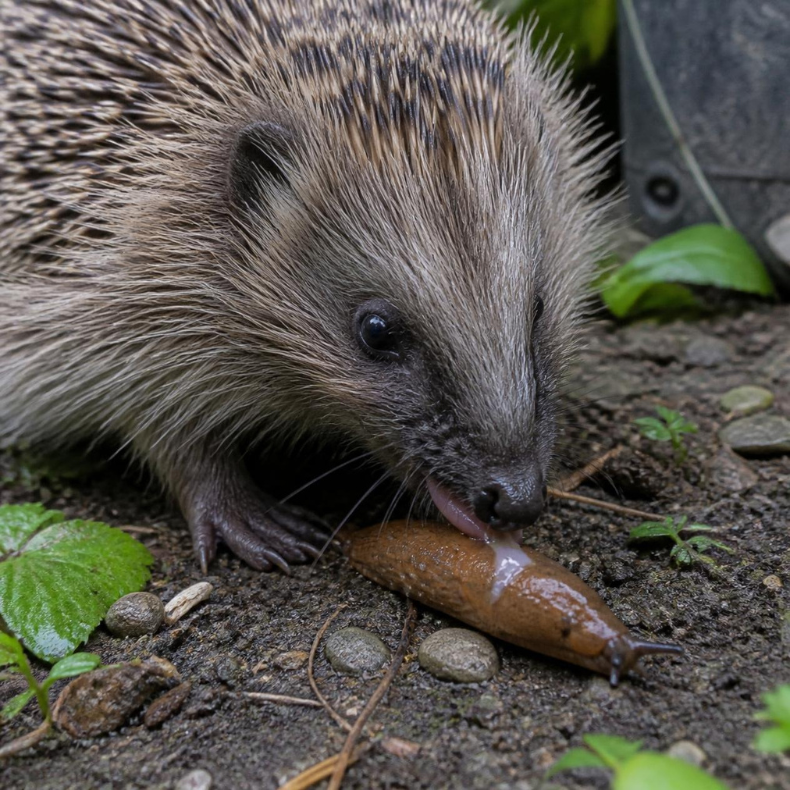
Hedgehog Scrapes off slug slime with its front paws before eating. Hedgehogs are natural predators of slugs and snails, so knowing whether they visit your garden can help you understand its wildlife
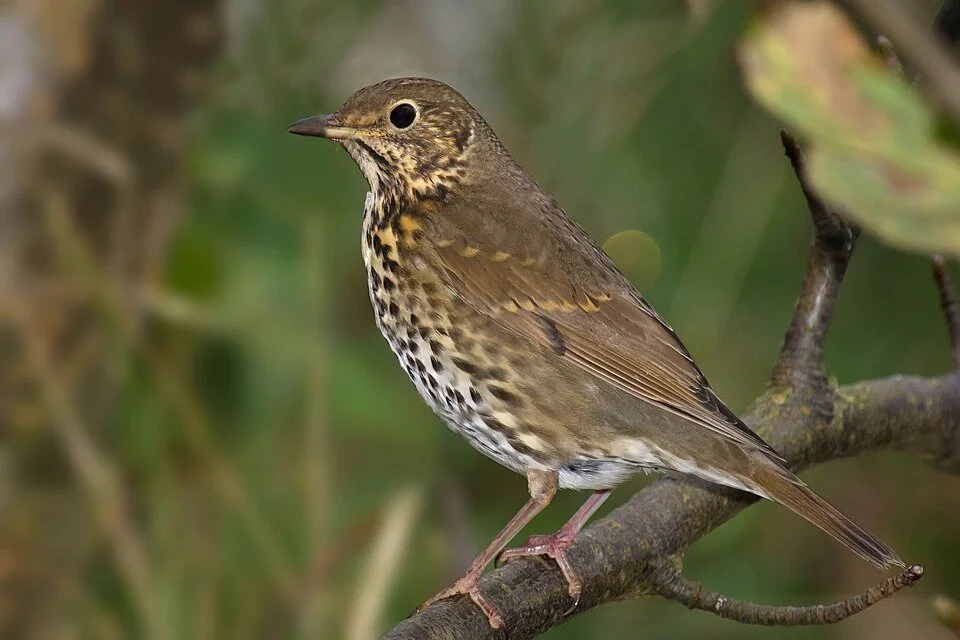
Song Thrush
Smashes snail shells against a flat stone ("anvil") to get to the snail inside. Encourage with a flat stone in a quiet corner.
Attribution: Andreas Trepte, CC BY-SA 2.5
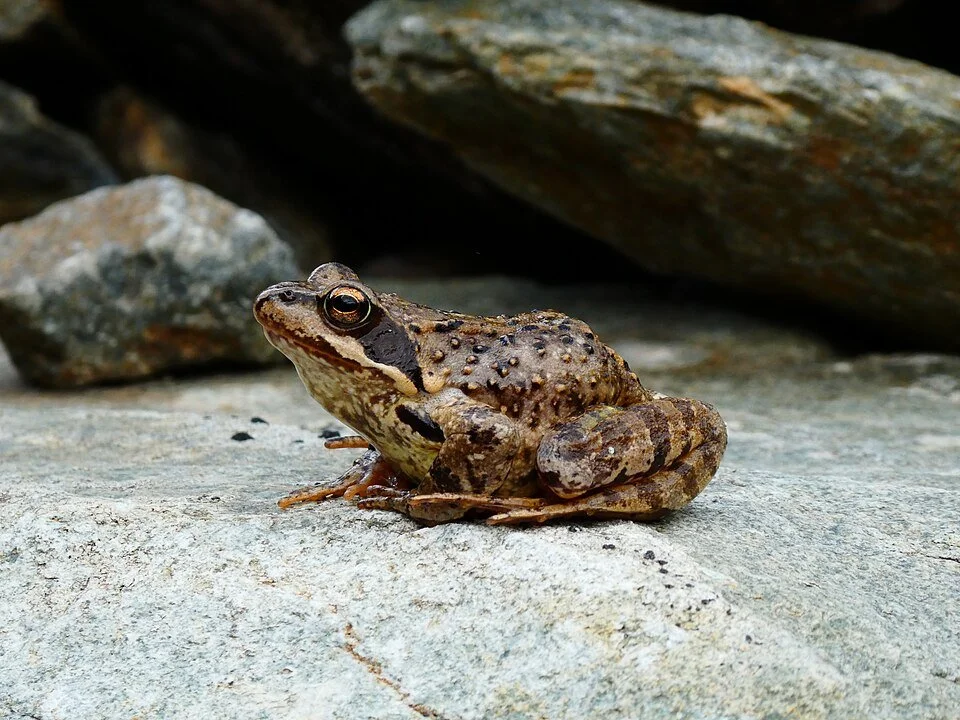
Frog & Toad - Ambush predators, Most active on damp nights. A garden pond can provide valuable breeding habitat and encourage frogs and toads into the garden. Attribution: Snyjo, CC BY-SA 4.0, via Wikimedia Commons
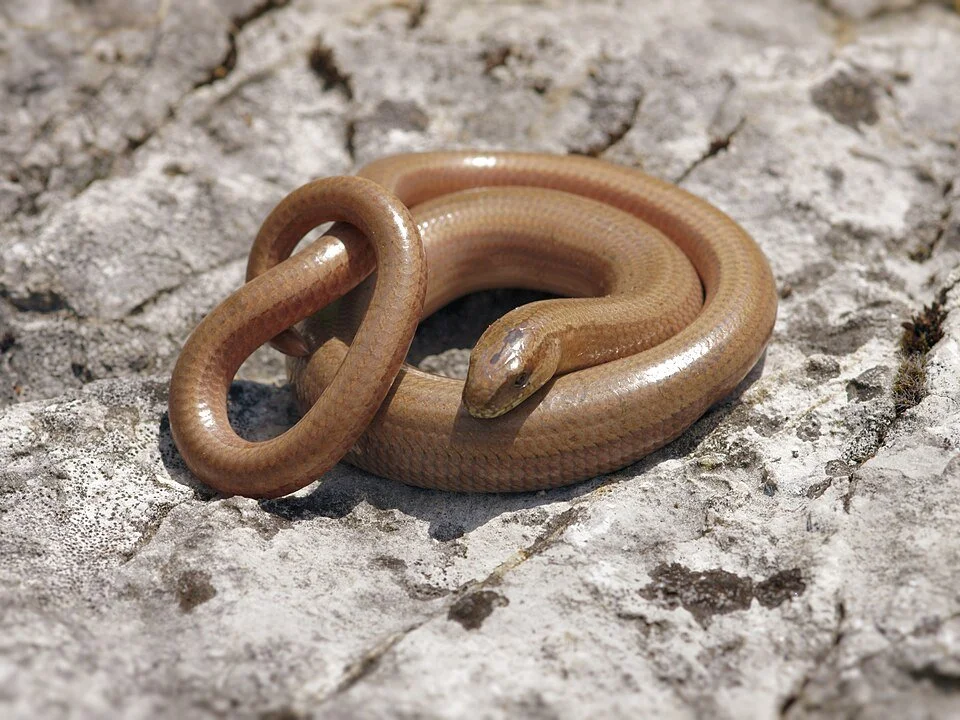
Slow-worm A specialist hunter of slow-moving prey, particularly small slugs. Most active around dusk and dawn. Legally protected — a species worth encouraging, not disturbing. © Hans Hillewaert
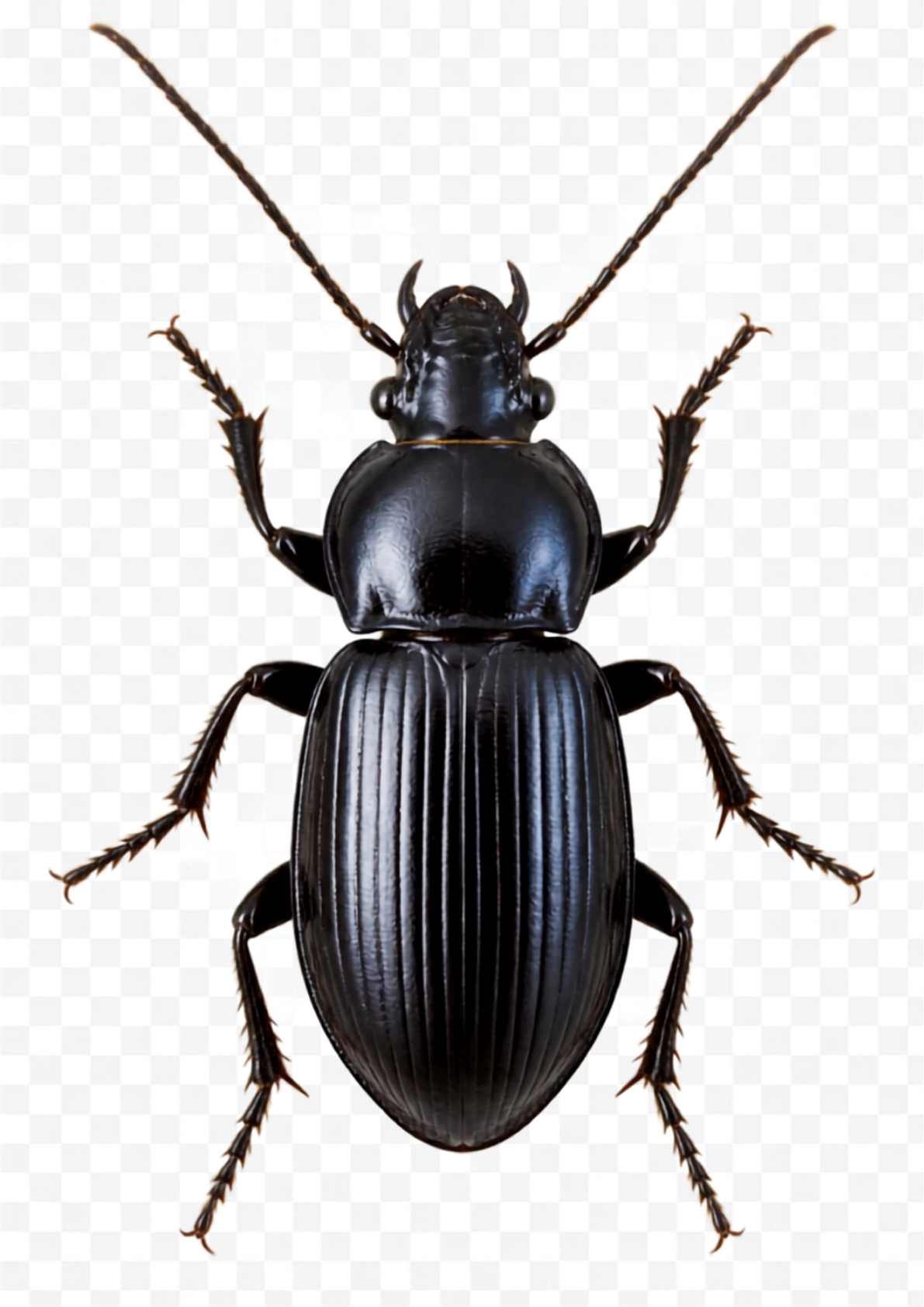
Ground Beetle Ground Beetle Follows slug slime trails and hunts slugs and other ground-dwelling prey. Some of the larger ground beetles can attack snails and may extract them from their shells. Mostly nocturnal — active at much the same time as slugs.
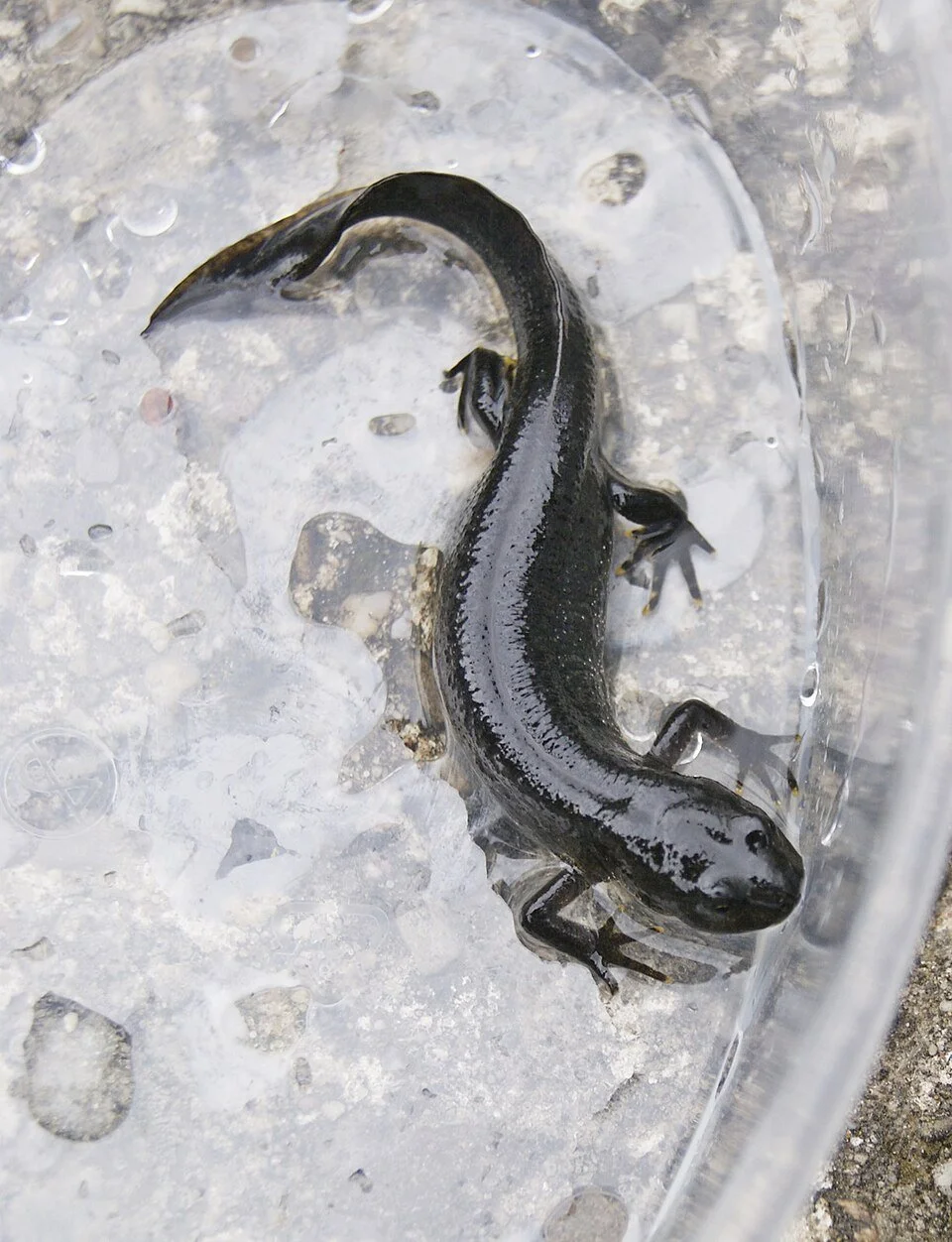
Newt
Both smooth and great crested newts hunt slugs, on land as well as in water. Great crested newt is a legally protected species.
Danny S., CC BY-SA 4.0
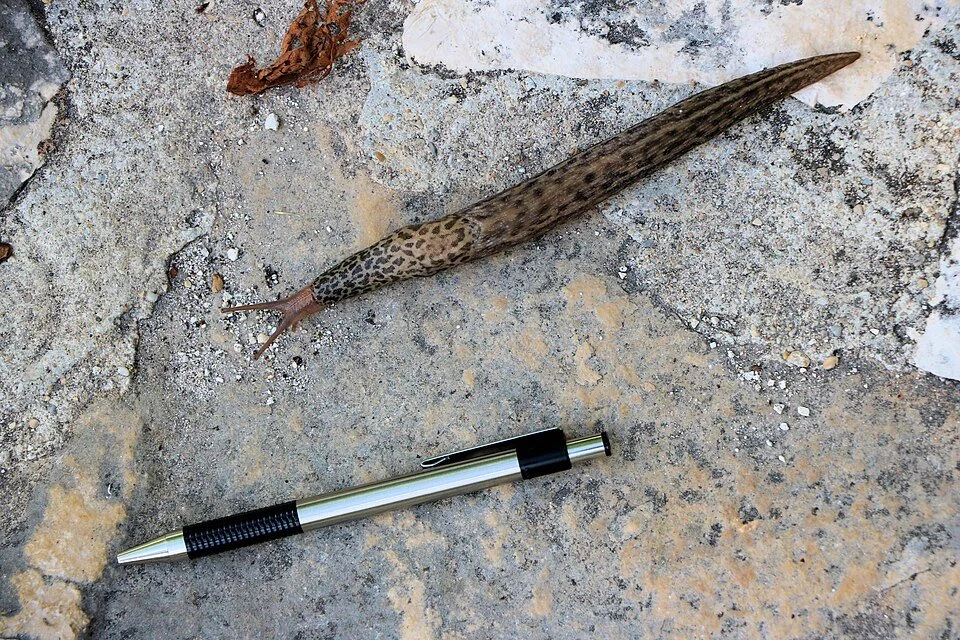
Leopard Slug (Limax maximus) A large, highly territorial slug that spends much of its time under stones, logs and other dark cover. It may attack other slugs and their eggs, as well as feeding on fungi, dead material and occasionally plants. Generally a friend to gardeners rather than a pest — one to leave alone.
Anything that kills indiscriminately, such as slug pellets, puts every predator on this list at risk through secondary poisoning. A chemical-free approach protects the whole food chain, not just your plants.
Compare Control Methods
Every method below works differently with real trade-offs between cost, effort, and how much of the garden it actually protects. Figures assume a typical garden of around 300 to 500m², with roughly 120m² of vulnerable vegetable beds, borders and containers needing protection. Lawns and hard surfaces aren't treated by any of these methods, so the area figures below relate to that 120m² of beds and borders, not the whole plot.
-
The main slug pellet still legal in the UK (metaldehyde pellets were banned in 2022). Scattered thinly around vulnerable plants, they can stop slugs feeding, and the slug dies, often underground a few days later.
Typical seasonal cost: around £36, covering 120m² of beds and borders across 5 applications (April–June, plus one in autumn)
Your time: about 35 minutes across the season
Downsides: pellets only protect the areas you treat — lawns, borders you miss, and neighbouring areas stay vulnerable. Not selective, so they affect every slug in the treated zone, not just pest species. Some (but not all) popular slug pellets contain EDTA to make the iron more soluble, but EDTA can be harmful to earthworms at higher doses. Without EDTA the pellets are relatively safe, but the ferric phosphate is barely absorbed by the slug and isn't as reliably effective. This is a genuine trade-off rather than a simple "avoid EDTA" fix. Pellets are also visibly scattered across your beds, which some gardeners find unsightly, and they need to be kept away from pets and children.
Read more: RHS advice on slugs and snails
-
Free, and if done properly, very effective. A sustained collection schedule of late-night hand collection over the season reduces the population and stops breeding growth. Best plan is collecting about 11pm on dark, damp but warm nights with a torch. Collect for a few nights in a row at the beginning of the season, then monthly control collections. Don't forget the autumn — collecting in October will significantly reduce breeding populations and pay off next spring.
Typical seasonal cost: £0 (just a torch and gloves)
Your time: About 15 to 20 minutes per night, concentrated into the wet, mild nights when slugs are actually active
Downsides: entirely weather-dependent and hard to schedule around. The best nights for slugs are often the least convenient for you. Genuinely antisocial hours, especially through a working week. Its important to identify good and bad slugs so we keep the useful ones. Identification can be difficult. Need to dispose of the slugs collected. The recommended humane method is freezing, then disposing of them in the domestic bin.
Read more: RHS advice on slugs and snails
-
Shallow containers of cheap beer sunk into the soil near vulnerable plants. Slugs are drawn by the fermenting aroma and drown.
Typical seasonal cost: £30–£50 for 5 to 6 traps across the main April–June season (more if kept running into autumn)
Your time: around 13 hours across the season — traps need refilling every 2 to 3 days, more often in wet weather
Downsides: "coverage" and "pulling power" aren't the same thing here. Each trap only directly protects a small area, but the fermentation odour can attract slugs from further away. That doesn't necessarily mean the trap protects the surrounding garden, and it may simply concentrate slug activity around the trap. Traps can also kill ground beetles, one of the most effective natural slug predators — a real ecological cost alongside the intended one. Missing a refill for a few days makes a trap ineffective, so it requires a sustained campaign. Widely described as unsightly, with dead slugs and stale beer needing clearing out regularly.
Read more: RHS advice on slugs and snails
-
Copper tape or mesh fitted around raised beds or pots. The theory is that slugs dislike crossing it.
Typical seasonal cost: £45–£75 to fit 3 to 5 raised beds, then roughly £20/year as tape oxidises and needs replacing
Your time: 4 to 6 hours to install initially, then 1 to 2 hours a year checking for gaps and green oxidation patina
Downsides: recent RHS trials in realistic garden conditions found no measurable reduction in slug damage from copper tape barriers. Similar negative results were found for bark mulch, eggshells, sharp grit and wool pellets. Laboratory studies have shown copper can deter slugs, but that effect has proved unreliable in real gardens. Even where it might help at the margins, it only protects raised beds and pots, never in-ground borders, and requires a complete, unbroken barrier — any gap defeats it entirely.
Read more: RHS advice on slugs and snails
-
A family of popular DIY deterrents, all working on the same basic idea: a rough, dry, or unpleasant-textured barrier around vulnerable plants that slugs are supposed to avoid crossing.
Typical seasonal cost: low — wool pellets and mulch run roughly £10–20 to cover a few beds; eggshells and grit are often free if home-saved, though buying grit in bulk adds up
Your time: an hour or two to lay initially, topped up periodically as material breaks down or washes away
Downsides: the evidence is disappointing. The same RHS controlled trial mentioned above found no measurable reduction in slug damage from any of these — wool pellets, bark mulch, eggshells, or sharp grit. They're widely repeated as folk wisdom, but the RHS's own garden-realistic study couldn't detect a real effect from any of them.
Read more: RHS advice on slugs and snails
-
Rather than treating slugs directly, this approach works on the garden's whole ecosystem — making your garden genuinely attractive to the animals that already eat slugs and snails, such as hedgehogs, frogs and toads, song thrushes, slow-worms, ground beetles, and newts. Monty Don favours this approach over chemical intervention, encouraging thrushes, frogs, toads, beetles, centipedes, shrews and hedgehogs in his own garden.
Typical seasonal cost: mostly free — a flat stone for a song thrush "anvil", a log pile or wild corner for hedgehogs, leaving some leaf litter rather than clearing it all. A garden pond is the one significant upfront cost if you don't already have one, but it's also a very effective addition, benefiting frogs, toads and newts at once.
Your time: low ongoing effort, but real patience — this is a slow-build approach, not a quick fix
Downsides: doesn't remove an existing bad infestation quickly — it's a long-term commitment, not an immediate treatment. Results depend on what's already living nearby and how long it takes predator populations to establish and find your garden. It also works best on its own: slug pellets and beer traps both harm the ground beetles and other predators you're trying to encourage, so leaning on those alongside this approach undermines some of its own benefit. As Monty Don puts it, this route requires "a degree of tolerance for collateral damage" — accepting some ongoing plant losses as the cost of a healthier garden ecosystem overall.
Upside: this is a method that improves over time, rather than needing to be repeated every season.
Read more: RHS advice on slugs and snails
-
A biological control. Microscopic parasitic nematodes, watered into the soil, that specifically target underground slugs.
Typical seasonal cost: £40–£120 for one or two applications (spring is essential; a second application in autumn is optional, but reduces the population that would otherwise overwinter)
Your time: well under an hour and a half across the season
Downsides: only works in cool, moist soil above 5°C. Not selective below ground — it will kill both pest slugs and harmless species. Ineffective in a dry spell, though slugs are largely inactive then too. Soil type matters: heavy, poorly drained clay or very free-draining sandy soil can reduce effectiveness. Does nothing for snails, which rarely come into soil contact with the nematodes. The RHS notes this is specific to molluscs with no adverse effect on other types of wildlife, which is a genuine advantage over pellets or traps.
Read more: RHS advice on slugs and snails
-
Regular collection at night over the season, on a schedule matched to actual slug activity rather than whenever you happen to be free. This is combined with early-evening fermented baiting stations to attract slugs and snails to central points, and damp glide pathways to encourage travel there.
Coverage: the whole garden, not just treated beds — this is the one method here that isn't limited to a 120m² zone
Your time: none
Downside: uses an attractant bait at collection points, same as the beer traps above. The attractant's scent can draw slugs in from beyond the immediate area, not just concentrate the ones already there. Effectiveness also depends on visit frequency matching the activity cycle. Infrequent visits during a peak give weaker results, same as any method. Doesn't stop new slugs migrating in from neighbouring gardens between visits, which is the same for every method discussed.
Upsides: can be combined with the natural predators approach above over time. No unsightly traps or pellets left out during the day.
Pricing and visit plans: see the Slugist page
Jump to - | Top of page | Good Slugs | Pest Slugs | Life Cycle | Slug Predators | Control Methods |
Join Hortimate and let us deal with your garden slugs with targeted night-time collections.