
Feeding Your Plants
Most gardeners focus on planting, weeding and enjoying the garden. It’s a lot of investment in time and money, but mostly, the plants just grow and give us great pleasure in return. Feeding and fertilising is often forgotten until something goes wrong. A little bit of extra effort to feed your plants will however give great rewards, and will protect your investment in gardening time and money. This page shows you how to do it yourself, and complements the soil and watering knowledge pages. If you want help with feeding advice and live in our area of service, we can do it for you. Hortimate offers a free garden survey and soil check with no obligation to purchase services.
Most of a plant's bulk doesn't come from the soil, it comes from air and water. Soil nutrients matter for a different reason: not building mass, but running the plant's internal chemistry. For thriving plants, you need to get the right nutrients to the right plant at the right time, and ensure a good supply of water and air to the roots.
Quick Facts
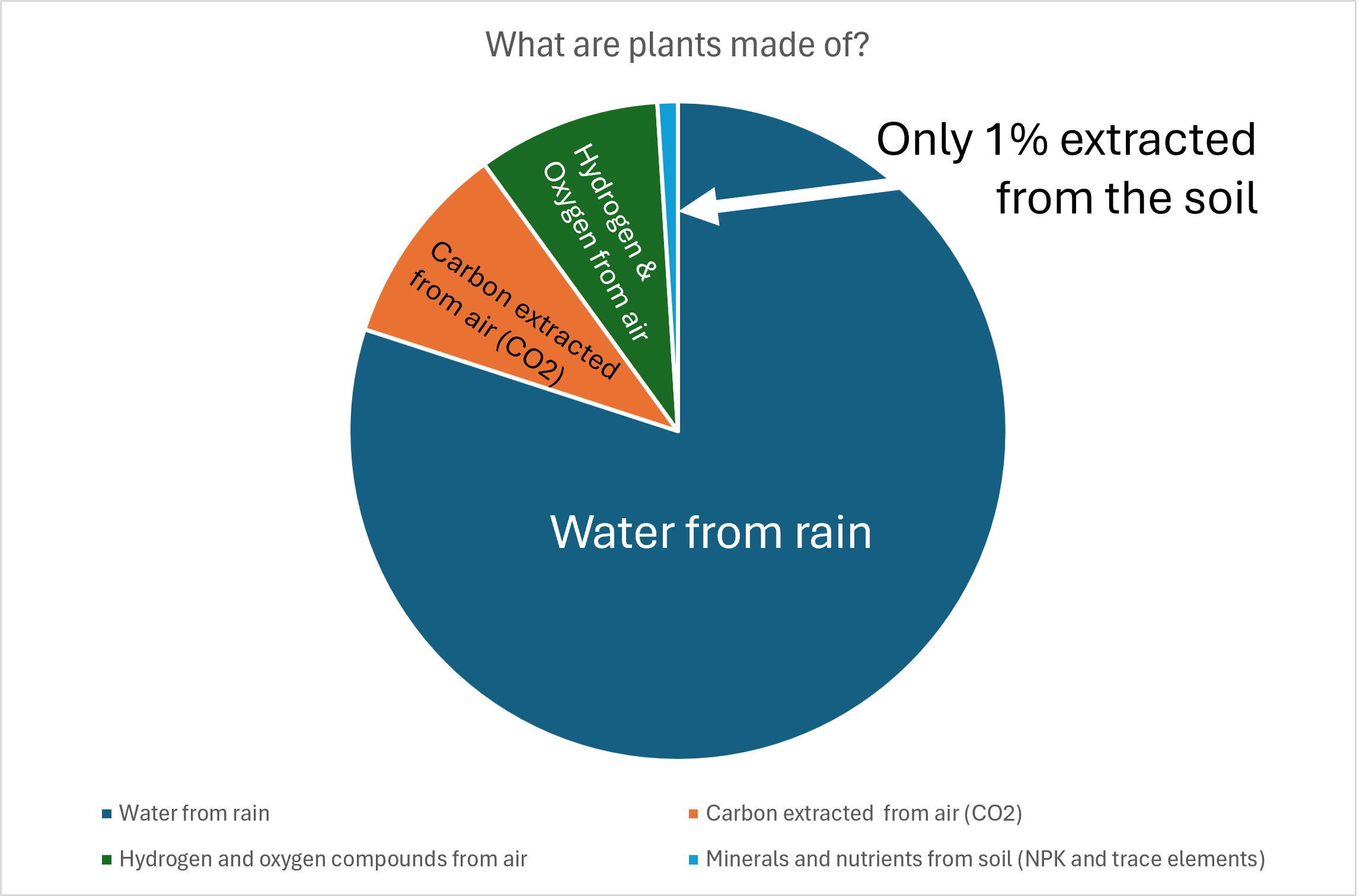
A plant's own weight mostly comes from thin air, not the ground it's planted in. In 1648, Jan van Helmont planted a 5lb willow sapling in 200lb of dry soil, watered it with nothing but rainwater for five years, then weighed everything again. The tree had grown to 169lb. The soil had lost just 2 ounces. He couldn't explain where the extra 164lb came from — we now know most of it was carbon, pulled from the air itself and built into the tree through photosynthesis. This is why plants are so important for stabilising our environment.
Living plants are 80% to 90% water. Once dried to remove the water, the remains are about 50% carbon, and about 45% hydrogen and oxygen compounds. The small remaining bulk is minerals and nutrients from the soil.
The soil nutrients run the plant's chemistry. Nitrogen (N) builds chlorophyll and proteins, phosphorus (P) drives photosynthesis and root growth, potassium (K) regulates water movement and enzyme activity. These are needed in comparatively small amounts, but the plant can't function properly without them.
All three of the vital NPK nutrients are needed in the right proportions. This is Liebig's “Law of the Minimum” first proposed in 1840 and still the basic principle behind plant nutrition today. A plant with abundant nitrogen and potassium but almost no phosphorus will still grow poorly, limited by the one nutrient it doesn't have enough of.
Feeding and watering are linked, not separate jobs. Plants take up nutrients through the roots dissolved in water. Feeding dry soil achieves very little, and can scorch roots if fertiliser sits concentrated against them without enough water to carry it in.
Over-feeding causes visible damage. Fertiliser applied too strongly, or too concentrated close to roots and foliage, draws water back out of plant tissue by osmosis. This creates chemical scorch that looks remarkably like sun or drought damage (see the Watering page's leaf scorch section).
The three-number code on every fertiliser bag or bottle reveals the NPK composition. More on reading it properly below.

How Plants Feed
Roots are the entry point for nutrients to take into a plant. Fine root hairs invisible to the eye do most of the work. They multiply a root's surface area, giving the plant far more contact with the surrounding soil than the visible root alone would suggest. This is why new plants need extra care, as they have not yet been able to develop the extensive fine root network. Leaves are built for photosynthesis and to absorb CO2 for that process. They are not able to as efficiently absorb other nutrients directly - but see foliar feeding below.
Nutrient uptake requires energy. Roots don't just soak up whatever's dissolved in the soil water around them. Nutrients introduced into soil by feeding will, over time, spread out evenly. Plants want to accumulate stores of these nutrients, so have to use energy to extract and retain the concentrated nutrients. This energy is derived from Oxygen, and this is why its so important to ensure air can get to the roots. If the ground is very compacted or waterlogged the roots cannot generate the energy to extract the nutrients from the soil, no matter how much you feed them.
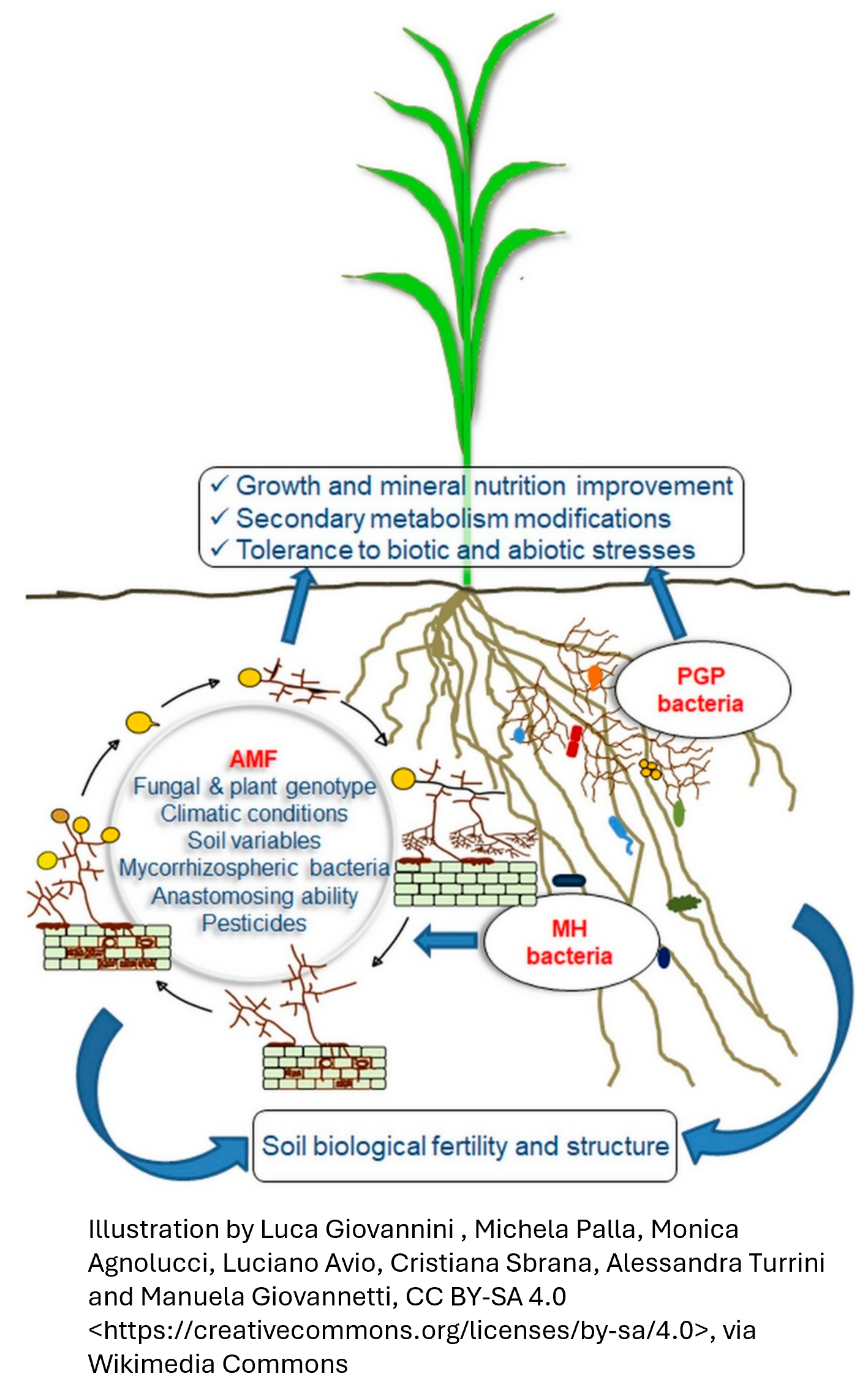
Most plants aren't feeding alone. About 80% to 90% of land plant species form a partnership with Arbuscular Mycorrhizal Fungi (AMF). Plant roots generate chemical signals which cause the fungus to fertilise and send out a network of microscopic nutrient collecting threads. The fungus also “connects” directly inside the root. This connection forms a chemical exchange interface. The fungus provides a supply of vital nutrients such as phosphorous. The root gives back about 20% of its photosynthesis created sugars to the fungus. This extends a plant's effective root network far beyond what its own roots could reach. It is particularly useful for phosphorus, which barely moves through soil on its own. Brassicas such as cabbages, kale, broccoli and relatives are a notable exception and don't form this partnership. Analyzing your soil under a microscope for mycorrhizal fungus threads gives a further insight into your gardens plant health. Hortimate can do this for you if you live in our service area.
Foliar feeding. Leaves can absorb a limited amount of nutrient directly, typically estimated at 15–20% of what's applied. It's not a replacement for feeding the soil, but can be useful for some specialised situations.
No-dig gardening and its impacts on soil nutrients
No-dig helps the root–fungus partnership. Repeated digging breaks the fine fungal networks that extend beyond plant roots and helps them find nutrients, particularly phosphorus. This method leaves the soil largely undisturbed. Adding organic matter at the surface allows these networks to develop and remain connected to the roots. It doesn't mean plants never need feeding. It means that before adding more fertiliser, it is worth considering whether the soil itself is healthy enough for the plant to make good use of the nutrients already there.
The other nutrients plants need
NPK gets most of the attention, but plants need other nutrients in meaningful quantities too. Calcium, magnesium and sulphur are needed in relatively large amounts, while trace elements such as iron, manganese, boron, zinc, copper, molybdenum and chlorine are needed in much smaller quantities.
Calcium builds cell walls and drives root development. Deficiency shows as stunted growth and poor roots. The most recognisable garden symptom is blossom end rot, a sunken black patch on the bottom of tomatoes and peppers. This usually isn't a calcium shortage in the soil. Calcium moves freely through a plant dissolved in water, but once the water evaporates it stays where it is. (Like the limescale on a kettle). Leaves transpire much more water than developing fruit, so they receive a greater share of the calcium carried in that water. If water uptake is interrupted, the developing fruit can receive too little calcium. . The fruit takes lower priority, and does not get sufficient calcium. This shows up as a dark spot as the fruit grows. The answer is to keep the soil consistently moist, particularly during fruit formation, avoiding repeated drying out and flooding.
Magnesium is essential in at least 4 key plant processes. For example it is the central atom in the chlorophyll molecule that enables photosynthesis, and is mobile within the plant. Deficiency shows the same way nitrogen deficiency, with yellowing between the veins on the older leaves first (see the mobility rule on our Soil page). This is the opposite pattern from iron deficiency, which is immobile and shows on the newest leaves. If magnesium deficiency is confirmed, a magnesium-containing feed can provide a rapid correction; Epsom salts (magnesium sulphate) are sometimes used as a foliar feed. However, foliar applications need care because concentrated solutions can scorch leaves, particularly in bright sunlight. For a longer-term correction, dolomitic limestone supplies both magnesium and calcium, but it also raises soil pH, so it should only be used where the soil chemistry makes it appropriate.
Sulphur deficiency is uncommon in most garden soil, but shows as an all-over pale yellowing in newer leaves, affecting the whole leaf including the veins. Sulphur is an important part of the plants amino acid manufacture, acts as an antioxidant, and is used in the creation of vitamins such as B1. It also gives the distinctive smell to onions, garlic and leeks, and gives the peppery bite to cabbage, broccoli and mustard. If sulphur deficiency is confirmed, a sulphur-containing fertiliser or well-rotted organic matter can provide a longer-term source. Epsom salts also contain sulphur, but should not be used routinely unless the plant actually needs magnesium as well.
Micronutrients are needed in very small amounts but still cause real problems if missing. Manganese and boron in particular can affect flowering and fruit set. Since several of these produce genuinely similar-looking symptoms, the RHS's own Nutrient deficiencies diagram is worth using directly for exact identification.
Drought, waterlogging and poor light can all mimic nutrient deficiency symptoms and should be the first thing to check. If a plant is still struggling despite decent soil, feeding, and watering, a nutrient shortage is worth investigating.
Reading a Fertiliser Label
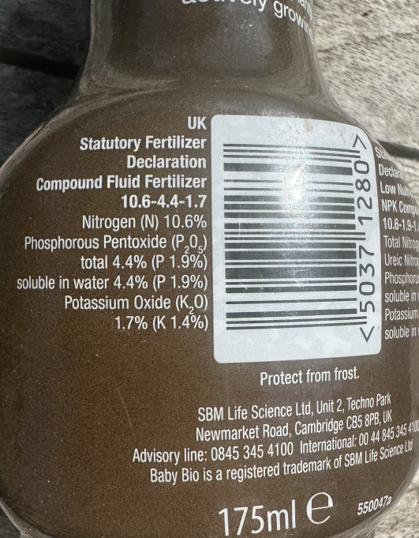
Every fertiliser bag or bottle shows three numbers in a fixed order as nitrogen (N), phosphorus (P), potassium (K). For example 10-10-10 or 20-5-10.
• A higher first number means more nitrogen relative to the others, generally favouring leafy green growth.
• A higher second number means more phosphorus relative to the others, which can be important for root development, flowering and seed formation.
• A higher third number means more potassium relative to the others, which supports water regulation, enzyme activity, stem strength and overall plant function.
Matching the ratio to what a plant needs is the most important factor in choosing a fertiliser. The nitrogen figure is the percentage of nitrogen by weight. The phosphorus figure is the percentage expressed as phosphorus pentoxide (P₂O₅), with the actual elemental phosphorus being about 0.44 of that figure. The potassium figure is the percentage expressed as potassium oxide (K₂O), with the actual elemental potassium being about 0.83 of the figure given. The remaining percentage is made up of other ingredients and may include micronutrients. Some suppliers will show the actual elemental values in brackets after the conventional label percentages.
Jump to | Top | How plants feed | Other nutrients | Deficiency symptoms | Organic vs Synthetic | General purpose feeds | Specialised feeds | When and how to feed |
Spotting Deficiencies — Where to Look First
The most common and the most easily fixed causes of problems are drought, waterlogging, poor light, and plants not yet established. These factors can all produce symptoms that look identical to a genuine deficiency. If a plant is struggling despite otherwise good care, a soil test is the reliable way to confirm whether any key nutrients are missing. This is included as standard in every free Hortimate garden survey.
If the above factors have been eliminated, the RHS website contains a comprehensive diagnostic tool and offers a paid for soil diagnostic test and report.
A quick check is to look at which leaves are affected. The older ones lower down, or the newest growth at the tips? This can indicate whether it’s a mobile nutrient or a relatively immobile nutrient that is causing the problem. Some nutrients can be relocated by the plant from old growth to new when supply is short, while others can't move once they've been incorporated into older tissues.
Older leaves affected first (mobile nutrients)
Pale or yellowing, sometimes with a purple tinge, overall weak growth: nitrogen
Dull, dark green or purple-tinged leaves, stunted growth, poor flowering or fruiting: phosphorus
Scorched or browning leaf edges, weak stems: potassium
Yellowing specifically between the veins (the veins stay green): magnesium
Newest growth affected first (immobile nutrients)
Yellowing between the veins on new leaves specifically: iron. See soil pH, for the mechanism and why alkaline soil makes this worse
Pale yellowing across the whole new leaf, including the veins: Sulphur. See “The other nutrients plants need” (Above)
Distorted or stunted new growth, and separately, a sunken dark patch on the blossom end of tomatoes or peppers: calcium. The blossom-end rot symptom is usually caused by poor calcium distribution within the plant, often following inconsistent water supply, rather than a lack of calcium in the soil.
Poor flowering or fruit set, distorted new leaves: often manganese, boron, or zinc. Since several micronutrient deficiencies look genuinely similar to each other the RHS's own Nutrient deficiencies diagram is the better tool for pinning down exactly which one.
Organic vs Synthetic Feeds
Plant fertilisers are broadly classified as organic or synthetic. Both have their advantages, and the important difference is how the nutrients are made available to the plant.
Organic feeds such as compost, manure, bone meal and seaweed generally contain nutrients in forms that depend to varying degrees on microbial activity and decomposition before plants can access them. Microbial activity speeds up as soil warms and slows as it cools, so nutrient release naturally tends to follow the growing season. They are slow to act, but give long lasting benefits, and are very hard to over-apply to the point of harm.
Synthetic feeds are refined into simple, water-soluble forms a plant can absorb immediately. No microbial breakdown is needed. That makes them fast and precise. Useful when a plant needs correcting quickly, but can causes fertiliser burn on leaves if overdone. The fact they are water soluble also means they are easily washed away, and will require regular use to replenish. High levels of readily available phosphorus can also reduce a plant's reliance on, and colonisation by, mycorrhizal fungi, since the fungal network becomes less useful when phosphorus is already freely available. .
A visibly struggling plant benefits from a synthetic feed's speed. A garden's long-term soil health may benefit more from organic matter's slow, steady approach. Many gardeners reasonably use both: organic feeding as the routine, ongoing approach, with a synthetic feed kept in reserve for a plant that needs a quicker fix.
Compost isn't really a fertiliser
Compost contains nutrients, but its bigger contribution is to the soil itself. It adds organic matter, helps improve structure and water-holding capacity, supports soil organisms and releases nutrients slowly as it breaks down. Its nutrient content varies enormously, so it is difficult to use as a precise fertiliser.
Think of compost as feeding the soil as much as feeding the plant.
Want to make your own compost? The RHS has a comprehensive guide covering construction, maintenance and use: Composting | RHS
General purpose feeds
Broad-spectrum feeds suited to most plants, rather than one specific need. A sensible starting point if you're not dealing with a particular deficiency or a specialist plant.
-
Organic or synthetic: synthetic
Speed: fast-acting, since nutrients are already in a plant-available form
Best use: general spring feeding for borders, vegetable beds, and shrubs, or preparing ground before sowing a lawn
Application: scattered as a top dressing, typically March–April
-
Organic or synthetic: organic
Speed: slow release, taking 4–8 weeks to become fully available, since soil microbes need to break it down first (see Organic vs Synthetic Feeds, above)
Best use: an all-round alternative to Growmore where a gentler, longer-lasting feed is preferred — good for new plantings, since the slow release carries very little burn risk
Application: worked into soil before planting, or as a top dressing from February–March
-
Organic or synthetic: organic
Speed: slow release, similar timeframe to blood, fish and bone
Best use: general soil enrichment across vegetable plots, borders and beds — a cost-effective source of nitrogen in particular
Application: scattered February–October; worth applying on a still day, since the smell is noticeable for a day or two afterward
-
Organic or synthetic: available as either
Speed: fast-acting, since it's already dissolved and immediately available to roots
Best use: containers, hanging baskets, and anywhere needing more frequent, adjustable feeding through the growing season
Application: diluted into a watering can, applied weekly to fortnightly, April–September
-
Organic or synthetic: organic
Speed: fast-acting
Best use: worth distinguishing two types before buying — pure seaweed extract is a tonic (trace elements, natural growth compounds) rather than a primary feed, while some products add extra NPK on top specifically so the seaweed extract can double as a main feed. Check which one a product actually is before relying on it alone
Application: diluted and watered on, or used as a foliar spray, through the growing season
Specialised Feeds
Feeds formulated for a specific plant types or situations, rather than general-purpose use.
-
What it's for: deliberately lower in nitrogen relative to potassium, because too much nitrogen encourages leafy growth at the expense of fruiting. Potassium supports water regulation, enzyme activity and the movement of sugars within the plant, all important during flowering and fruit production.
Also suitable for: peppers, aubergines, courgettes, and soft fruit — anything cropping rather than just growing leaves
Application: typically every 1–2 weeks from flowering through to the end of harvest, following the product label
-
What it's for: formulated with added iron and trace elements specifically to counter iron lockout. Most struggling ericaceous plants (camellias, rhododendrons, blueberries) are reacting to alkaline soil, making iron unavailable, not a general lack of feeding.
Application: through the growing season, alongside watering with rainwater where possible rather than hard tap water (see Water Type Impacts on our Watering page), since hard water gradually pushes soil back toward alkaline over time
Worth knowing: in stubbornly alkaline soil, growing acid-lovers in containers of ericaceous compost is often a more reliable long-term fix than repeatedly correcting native soil every year
-
What it's for: roses flower for months at a stretch, from May through the first frosts, and benefit from a balanced feed during this period. Potassium supports water regulation and overall plant function during flowering, while magnesium and iron help maintain healthy green foliage.
Application: typically in spring as growth starts, and again in midsummer after the first flush of flowers, following the product label.
-
Spring/summer formula: high nitrogen, for the lush green leafy growth covered on our Watering page's lawn section
Autumn formula: low nitrogen, higher potassium and phosphorus — encourages root development and hardening off rather than soft new growth, which would only be more vulnerable to the winter frost and disease risk.
Worth knowing: feeding a lawn through winter with a spring/summer formula is a mistake. It pushes soft growth at exactly the point the grass needs to be toughening up instead
-
What it's for: applying a dilute nutrient solution directly to the leaves. This can provide a rapid correction for some nutrient deficiencies or help when root uptake is temporarily restricted, but it is not a substitute for healthy roots and soil.
Application: spray a suitably diluted product evenly over the leaves, following the product label. Apply in cool, dull conditions rather than bright sunshine, and avoid spraying drought-stressed plants because concentrated solutions can scorch foliage.
-
What it's for: Leaves absorb roughly 15–20% of what's applied directly. This method is most useful for a fast correction of a visible deficiency. (the Epsom salts example is a foliar application). Also used for micronutrients specifically, since foliar feeding bypasses soil-level lockout problems like the pH-driven iron shortages.
Application: diluted and sprayed directly onto leaves, ideally on a dull, overcast day rather than in full sun.
When and How to Apply fertiliser.
Feeding should follow the growing season, not the calendar month. Start feeding as growth resumes in spring, feed steadily through the peak growing months when plants are actively using nutrients, then taper off through autumn and stop through winter dormancy.
Water first, then feed. Fertiliser applied to dry soil sits concentrated rather than dispersing properly. It draws water back out of root tissue by osmosis rather than delivering nutrients. A thorough watering before feeding avoids this.
Follow the dilution ratios on the product. More concentrated isn't a stronger feed delivered faster. This applies especially to liquid and foliar feeds, where it's easy to assume a bit extra won't hurt.
Before feeding a struggling plant, check whether feeding is actually the answer. Drought, waterlogging, poor light, and a plants not yet established can all produce symptoms that look exactly like a nutrient deficiency. Feeding a plant sitting in waterlogged soil, doesn't fix the real problem.
Getting It Done For You
Our Aquist holiday watering visits can include plant feed and fertiliser at booking, applied alongside your regular watering while you're away. For broader, ongoing feeding and soil improvement work across the whole garden, our General Maintenance service provides this.
Every free Hortimate garden survey includes soil testing as standard, with an enhanced microscope option available, giving you a genuine starting point for what your garden actually needs.